Special Palestine Cry Blog articles: The Coming of the Antichrist: PASCENDI DOMINICI GREGIS
COMMUNISM IS ANTICHRIST AND SO IS NAZISM. THE PROFESSING CHURCH HAS ALWAYS HELD THAT.
Palestine's cause of her people before God is just. But from the very beginning ALL of that was subverted by the Nazi infiltration and the concommitant infiltration of Communism into every single aspect of Palestinian and Egyptian national life and every single country from throughout the entire Mediterranean and throughout the entire Near East and Southeast Asia and all of Asia.
Terrorism and the Illuminati.
Quite frankly, F.W. De Klerk and Nelson Mandela conspired to hand South Africa over to the Communists. Palestine is betrayed similarly to the Zio-Communists. The comparison of South Africa to Palestine is far more ominous than most people realize.
Special Palestine Cry Blog articles: Advent of the Antichrist
My Vlog - YouTube
The World; South Africa's Communists Arise, and the West Yawns - New York Times
COMMUNISM IS ANTICHRIST AND SO IS NAZISM. THE PROFESSING CHURCH HAS ALWAYS HELD THAT.
Palestine's cause of her people before God is just. But from the very beginning ALL of that was subverted by the Nazi infiltration and the concommitant infiltration of Communism into every single aspect of Palestinian and Egyptian national life and every single country from throughout the entire Mediterranean and throughout the entire Near East and Southeast Asia and all of Asia.
Terrorism and the Illuminati.
This is posted for factual information on the use of Terrorism by The Illuminati to subvert all Religion and Politics to their Goals. Only profession in Our Lord and Saviour Jesus Christ the Immortal Son of God and Messiah sent by that True God from Whom proceeds the Holy Spirit is salvific.
Palestine Cry: Terrorism and the Illuminati
God and His Messiah Jesus Christ our Lord - our right and duty to witness to Him: Terrorism and the Illuminati
Quite frankly, F.W. De Klerk and Nelson Mandela conspired to hand South Africa over to the Communists. Palestine is betrayed similarly to the Zio-Communists. The comparison of South Africa to Palestine is far more ominous than most people realize.
Special Palestine Cry Blog articles: Advent of the Antichrist
My Vlog - YouTube
The World; South Africa's Communists Arise, and the West Yawns - New York Times
The World; South Africa's Communists Arise, and the West Yawns
SOUTH AFRICA may not be the only country where Communists are on the rise -- just ask Boris Yeltsin -- but it is probably the only one whose Communists arouse so little comment in the West.
Mainstream Western politicians who speak with foreboding of the Communists' resuscitation in Eastern Europe scarcely mention Nelson Mandela's partnership with the Communists in South Africa. American and European businessmen scouting opportunities here seem unfazed by it. Yet if the pollsters are even close in their forecasts for South Africa's first free elections, to be held April 27-29, South Africa will have a higher proportion of Communist Party members in its new Parliament than Russia has in its.
Among the 200 candidates on the African National Congress's list for at-large seats in the Parliament, 34 carry Communist Party cards. Many more are former party members or kindred thinkers, and the support for state ownership and wholesale redistribution of wealth grows more intense in the middle and lower levels of the liberation movement. Communists, union leaders and officials of several small parties, longtime partners against apartheid, have opted to run as A.N.C. candidates rather than mounting their own campaigns.
The Communists include some of the congress's leading intellectuals, notably the avuncular Joe Slovo, the Communist Party chairman and No. 4 on the election list. Last week, in a speech to Johannesburg businessmen, he reaffirmed his commitment to an eventual Marxist future in which "all the means of production are socialized to serve the interests of the whole of society." This would be achieved, he noted, not by a Leninist putsch but by "ideological contest in a genuine multiparty democracy." For decades the A.N.C shared with its Communist compatriots Moscow's financial aid, military accoutrements and outlook, applauding the subjugation of Eastern Europe and pooh-poohing the Soviet repression of human rights.
Does it matter any more? It does to President F. W. de Klerk, whistlestopping across the prairie for his reformed National Party. He has been a selective Red-baiter, fulminating against the Communist scourge when it served his purposes, minimizing their importance when he happened to be negotiating with them.
Now they make a useful monster. It is a tricky business campaigning against Nelson Mandela, an icon to most South Africans and, despite the two men's intensifying election rivalry, still a kind of co-president in this twilight of white rule. Mr. de Klerk finds it easier to portray Mr. Mandela, never a Communist Party member, as a decent man surrounded by a Communist cabal. Thus in the National Party it is de rigueur to refer, not to the A.N.C., but to "the Communist Party/A.N.C. alliance." If the conservative Inkatha Freedom Party and the Afrikaner nationalists of the right wing decide to join the campaign, which depends on the outcome of seemingly interminable negotiations, the chorus of Red-bashing is certain to become even more strident.
The fear of Communism galvanizes some whites, especially devoutly Christian Afrikaners for whom "Communist" is still synonymous with "Antichrist." It is also, Mr. de Klerk's party is convinced, a useful line in the swing communities of Indians and mixed-race voters. Though victimized by apartheid, these voters are just enough better off than blacks that they fear egalitarian social justice.
Most South Africans, though, like most Western spectators, find that South African Communists make an unconvincing bogeyman, especially in a country that offers such alternative menaces as right-wing whites in neo-Nazi regalia and black militants armed with AK-47's. The Communist Party itself is small -- 50,000 members is the probably inflated claim, compared with a million in the A.N.C. -- and disorganized and, since the dissolution of its Soviet sponsors, nearly penniless. The party is running under the banner of the A.N.C. partly out of devotion, but partly out of dependency.
Since it was legalized in 1990, the party has boasted two strengths: its ability to thrill township youngsters with revolutionary oratory, and the influence of several well-placed thinkers within the A.N.C. Their most important ideological impact had nothing to do with Marx: the Communists are generally credited with persuading the congress to switch from African nationalism to nonracialism in the 1950's.
But the party's following in the black townships suffered hugely from the murder last April of Chris Hani, the party's General Secretary and a figure second only to Mr. Mandela in popularity among blacks. And party intellectuals have had to sublimate their long-term goals to the compromises of negotiating a new constitution, wooing foreign investors, and running a country.
The congress's economic blueprint, published two weeks ago, calls for a mix of private enterprise and public regulation. It went through six drafts, and with each revision the authors planed away a bit more of the Marxist vision of state control and redistribution.
"It is not a socialist document, and it should not be," said Essop Pahad, a member of the Communist Central Committee. "At this stage, we need to unite vast numbers of people across lines of class and belief."
South African Communists still advocate what they call a "second phase," in which capitalism is erased. If it ever takes place, though, it is less likely to be the result of Communist inspiration than of the elemental yearning among ordinary blacks for a share of the wealth.
As Ahmed Kathrada, a congress executive and former Communist, points out, this kind of state intervention has a precedent in South Africa.
"The National Party itself nationalized several industries to reserve jobs for Afrikaners -- broadcasting, railways, telecommunications, iron and steel," he recalled. "We have a long way to go to match that."


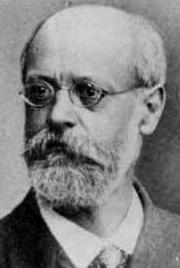
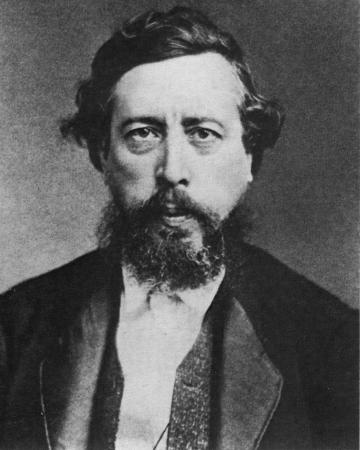 (1826-1900) After participating in the 1848 revolution, fled to Switzerland, then to England, returning to Germany in 1862. Liebknecht and Bebel were the first deputies of a left-wing party to be elected to the North German Reichstag. In Eisenach in 1869, Liebknecht and Bebel founded the Social-Democratic Workers' Party, and in 1891 were co-founders of the Social Democratic Party. Liebknecht was a member of the German Reichstag from 1874 until his death in 1900. See the
 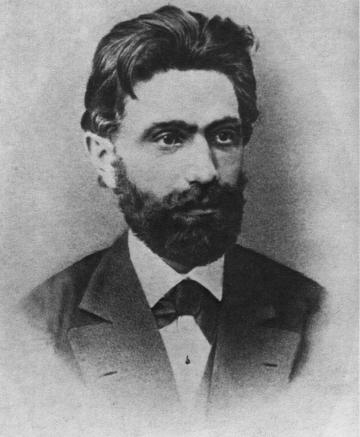 (1840-1913) Bebel had trained as a cabinet maker, and was introduced to socialist theory by the Lassallean German Workers' Association founded in 1863. In 1872, Bebel and Liebknecht were imprisoned for two years for their opposition to
 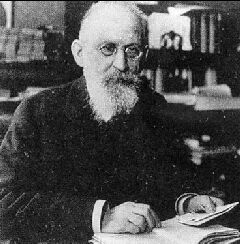 (1850-1932) Left Germany during the anti-Socialist laws to produce the Sozial Demokrat from Switzerland. Lived in London from 1888 to 1900 where he was close to Engels until Engels' death in 1895, and was named his literary executor. From 1896, Bernstein became an advocate of reformism, coining the aphorism: “The movement is everything, the final goal nothing”. See
 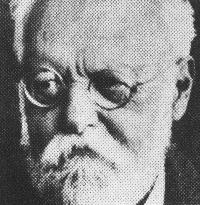 (1845-1938) In 1880, Kautsky joined Bernstein in Zurich who smuggled socialist material into Germany in defiance of the Anti-Socialist Laws. Bernstein introduced Kautsky to Marxism and Kautsky visited Marx and Engels in England. He founded Neue Zeit in Stuttgart in 1883 and was its editor until 1917. In this position he became the most influential leader of Social-Democracy and authority on Marxism until the Russian Revolution. In 1891, Kautsky's
 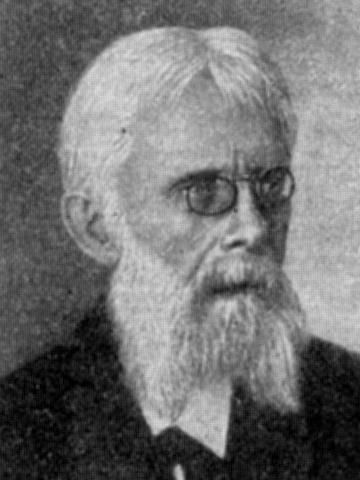 (1846-1919) Literary critic, writer and historian, a leader of the Left-wing of the German Social Democrats and later member of the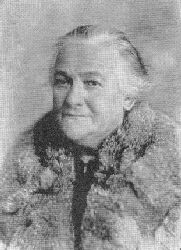
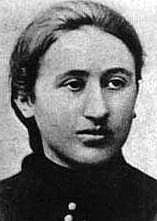
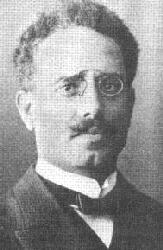
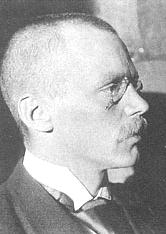
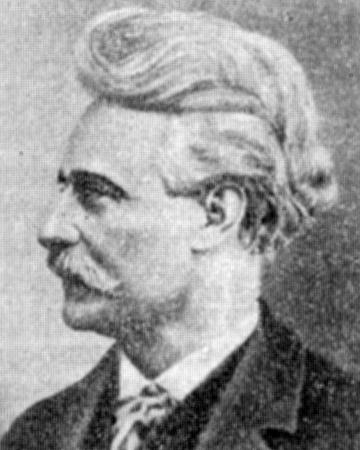
 (1845-1922) Publisher of L'Égalité, leader of the Marxist wing of the French workers' movement. In 1879, together with Lafargue, he founded the French Workers' Party [Parti ouvrier]. In the 1880's and 90's Guesde led the fight against the
 See
See 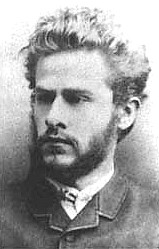
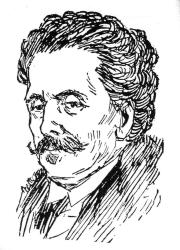

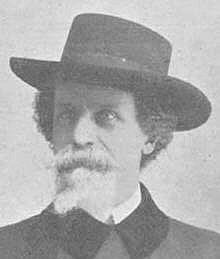
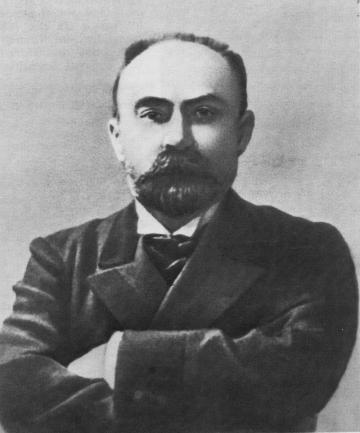 (1856-1918) Left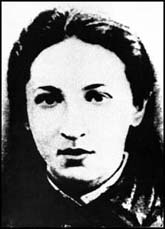
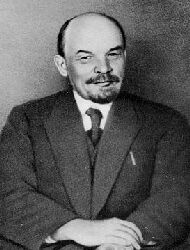 (1870-1924) Left Russia to meet with Plekhanov, returning to Russia in order to unite all the revolutionary circles in Russia in a single Party – the R.S.D.L.P.. However, Lenin's conception at this time was for a party of “professional revolutionaries”, rather than the amateurish revolutinary circles or loose labour parties of Europe. Over this issue, Lenin split with all the older generation of Russian Marxists.
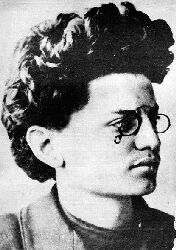 (1879-1940) Worked with Lenin on Iskra in 1902 but broke with Lenin after the
 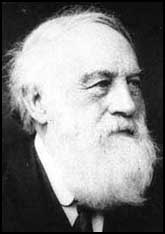 (1842-1922) While on holiday in the United States in 1881, Hyndman read a copy of Capital decided to form a Marxist political group when he arrived back in England. The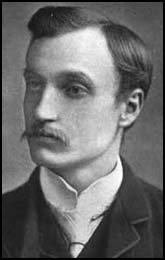

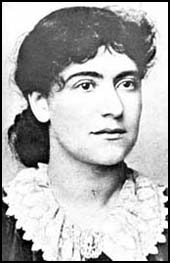
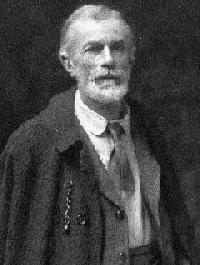
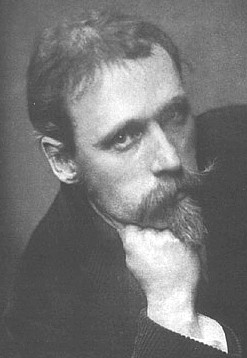
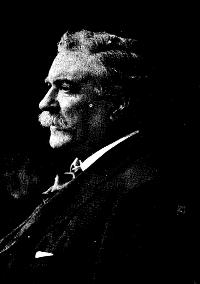
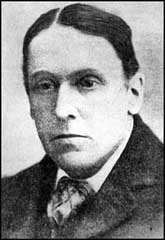
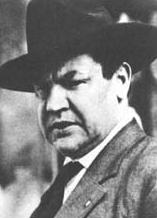
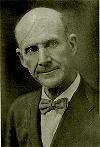
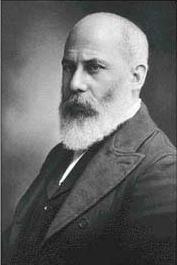
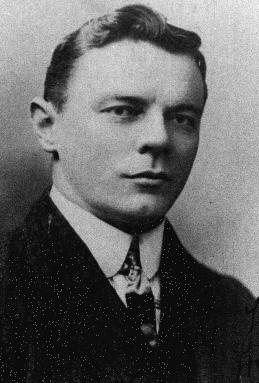 Marxists of the early years of the 20th century included Frank Hyett, John Curtin, Maurice Blackburn, Frank Anstey,